
Impact on Educators

Empowering teachers to transform classroom environments and adopt child-centric pedagogy.

Transforming Teaching Practices

NEET works closely with government school teachers, Anganwadi workers, and community educators to instill reflective teaching methods and create joyful classroom environments.

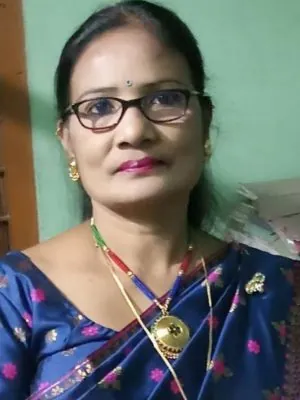
Sangeeta Deka
Educator Profile

Sangeeta Deka

Assistant Teacher, LOG Hindi High School, Guwahati

When new ideas find their way into the classroom

For Sangeeta Deka, teaching is not just about completing a lesson. It is about finding ways to help children participate, understand and express themselves. As part of NEET's engagement with LOG Hindi High School, she has participated in workshops, VTF and CRCC meetings that have given her opportunities to explore activity-based pedagogy, assessment practices and ways of tracking children's language development, and she has gradually taken these ideas into her own classroom, adapting them to the needs of her learners.

Turning lessons into experiences

Sangeeta Deka uses read-alouds, storytelling, rhymes, role play, flashcards and contextual teaching-learning materials to make language learning more active. For The Golden Touch, she used role play to help children experience the story; in another lesson, flashcards became a simple way to teach parts of speech and build sentences; and while teaching Gamosa – A Thread of Love, she began with a Bihu song, inviting the children to sing along before moving into the lesson, connecting the classroom to something familiar as an easier entry point into the text.

Helping children find their voice

Her classroom activities support children across oral language, reading and writing. Reading cards, storytelling and rhymes give children opportunities to listen and speak; picture-based materials and familiar examples help them connect words with meaning; and structured writing activities encourage them to express their ideas in simple sentences and build confidence through regular practice. The response is visible: children show growing interest in the worksheets and activities used in class, and Sangeeta herself regularly seeks additional grammar worksheets to reinforce learning, observing that consistent practice is helping students improve their understanding and performance.

Learning beyond her own classroom

Sangeeta's growth as an educator also comes from the spaces where teachers learn from one another. Through VTF and CRCC meetings, she discusses classroom challenges, observes different approaches and shares her own experiences, and her participation reflects a growing understanding of the programme and a willingness to keep experimenting with child-friendly pedagogy. Today, she is not only applying new approaches in her classroom but, as a resource person teacher, she is also part of a wider community of educators who learn, reflect and share together.

A classroom that keeps evolving

Sangeeta Deka's story is a reminder that meaningful change in education does not always begin with something big. Sometimes, it begins with a teacher trying a different activity, asking a different question, or finding a new way to help a child participate. With each new lesson, she continues to turn learning into something children can experience, engage with and make their own.
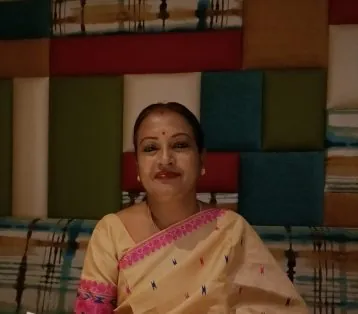
Kalpana Barman
Educator Profile

Kalpana Barman

Head Teacher, Kharghuli Sishu Vidyapeeth, Guwahati, Assam

Welcoming a shift to interactive methods

Kalpana Barman anticipated a switch from the traditional to an interactive method of learning when NEET made the proposition to start the Language Learning Programme at Kharghuli Sishu Vidyapeeth. "The Language Learning Programme has brought a fundamental change in the learning approaches of our students. Their gradual increase of interests in reading books other than their textbooks was prominent," she said, noting the students' shifting interest towards reading beyond their academic books.

Activity-based learning in the classroom

The head teacher observed that the methodologies used in the programme were assorted with several activity-based learning games and helped the students to engage and grasp the idea behind those activities quickly. The interactive methods applied by NEET's Language Learning Programme have helped in increasing the students' attention during class and have brought change in the teaching-learning process. "They are now receptive and wait eagerly for the teachers to come and continue with their lessons," she said.

A call for wider adoption

Kalpana Barman insisted that the head teachers of every school implement NEET's language programme in their school. "The programme will certainly help the students to expand their outlook on learning as well as support teachers in the teaching process," she said, making a clear call to take the programme to more classrooms across the city.

Deepa Das
Educator Profile

Deepa Das

Head Teacher, Jaipur Prathomik Vidyalaya, Guwahati, Assam

Initial scepticism, genuine curiosity

"When NEET approached me with the idea of implementing the Language Learning Programme in our school, I was sceptical if it would be feasible. But I was curious to understand about its practical application on our pupils," said Deepa Das. The head teacher also noted that she has been working with Jaipur Prathomik Vidyalaya for ages, and was intricately involved with countless teachers' training programmes arranged by the Government of Assam.

The challenge of two teachers and growing classrooms

When asked if her teachers were able to implement their learnings and use the resources they acquired during those programmes, she pointed out that they only have two teachers. "The idea of training the teachers and teachers coming back to school with the resources to execute in the class along with the school curriculum seems far-fetched. While we struggle to keep up with the syllabus, the growing number of students in each class has proven to be a challenge for us," she said, adding that the growing education gap between the students of their school and others is apparent, and the lack of teachers has only exacerbated the issue.

Students coming back to class

When asked whether the Language Learning Programme of NEET has brought any change to the learning environment at the school, she said: "I could see the development, several students came back to class and started attending regularly. NEET's Language Learning Programme was stimulating and interesting for our students and the programme was successful in promoting students' engagement through various fun-filled activities. The story telling sessions and its related activities have helped them in language development."

Reaching the slow learners

"Teaching slow learners has always been a challenge but the teaching methods applied by NEET with diverse approaches, for instance, picture book, displays, storytelling, etc., has helped the students to overcome learning issues," Deepa Das added, in a clear endorsement of activity-based learning in resource-limited classrooms.